

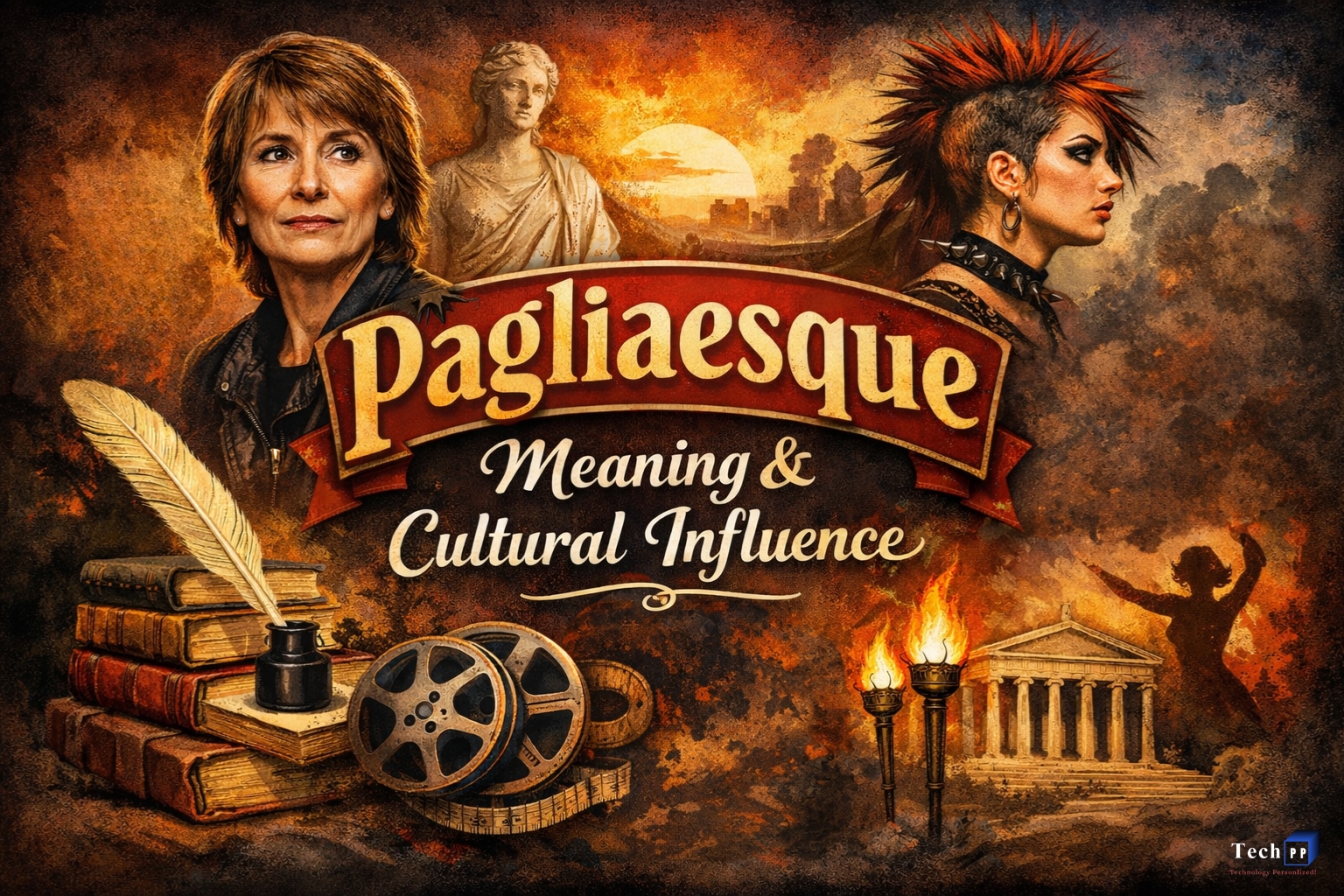
Pagliaesque! In recent years, a term that has become popular to capture a unique brand of intellect that is unafraid, combative, and well steeped in cultural criticism, is Pagliaesque. How is it defined and what are the reasons for its prominence in contemporary conversation?
At its most fundamental, a Pagliaesque view is a bold and well informed brand of thinking and writing and in this case, it is specifically attributed to the cultural critic, Camille Paglia. She employs an unflinching manner in addressing the conversation around art, society, gender, and history. This is a clear divergence from the prevailing theories. To unpack the full essence and cultural significance of this term, it is worth looking into the defining features, and influences of the term, Pagliaesque.
What Does “Pagliaesque” Mean?
Pagliaesque is a derivative of Camille Paglia’s last name, a cultural critic, author, and academic, and the term is most commonly used to cite writing or commentary that are in the same lane as Paglia’s.
In plain and simple terms, Pagliaesque describes the following:
1. A bold and unapologetic form of expression
2. A profound understanding of history, art, and literature
3. Intellectual courage to go against the prevailing or dominant ideologies
4. A fusion of analysis of both high and popular culture
Pagliaesque is not an attempt to establish a safe opinion, or to claim an opinion that is generally approved of. It is a term that is unyielding and thoroughly researched. Pagliaesque writers offer a rigorous synthesis of high culture and popular culture.
The Inspiration Behind Pagliaesque Style
The style that is now called Pagliaesque is derived from the personality and skills of Camille Paglia herself. Her attention grabbing book, Sexual Personae (1990), set a foundation for her reputation and notoriety for being a thinker who is not afraid to tackle criticisms from both end of the spectrum.
- Paglia’s writing is distinctive for her incorporation of the following elements:
- Classical education (Greek and Roman history, Renaissance art)
- Pop culture references (music, film, celebrities)
- Strong personal voice and conviction
As a result of this combination, a distinctive intellectual tone was born and others began to imitate it, giving way to the term Pagliaesque.
Pagliaesque Writing Style Defining Features
In order to better explain the term Pagliaesque, one should break down its defining features.
1. Intellectual Fearlessness
Pagliaesque writing is not afraid to be fearless. Writing of this kind is not fearful about taking a stand on a controversial issue or an unpopular stance. Writing of this nature looks forward to vehement debates, and seeks to challenge and encourage the reader to rethink their assumptions.
2. Cultural Literacy
A Pagliaesque perspective is not surface level. A Pagliaesque perspective stems from vast knowledge and a wide breadth of sources, which include, but are not exclusively, the following: Modern media, Classical Mythology, Art history, and Literature.
3. Outrageous Style
The style of writing is considered outrageous in nature. Such writing is characterized by its extreme and deliberate use of vocabulary, and to get the reader’s attention such writing employs vivid descriptions, and the like.
4. Aesthetic Integration
Seamless integration of high and low culture is one of the characteristics that is distinct. A Pagliaesque analysis may use Renaissance art that integrates the popular music of the time, or Roman mythology and modern cinematography.
5. Individualism
Pagliaesque writing cultivates free thought and defies groupthink and prescriptive readings based on ideologies.
Cultural Influence of the Pagliaesque Approach
The Pagliaesque style has influenced a range of areas from the extended media and journalism realm, including internet argumentation.
1. Cultural Criticism Articulation
One of the areas Pagliaesque influence has widened the horizon for critics is in the art of cultural (hopefully) critical discourse. This is mainly seen in the zealous encouragement for critics to go beyond the limits of established and recognized socio-cultural discourse in connection to temporaral and spatial aspects of socio-cultural phenomena. This alone has, to say the least, brought a lot of naunced and lively analysis of cultures.
2. Media and Journalism
A lot of contemporary writers and people who share their opinion, especially in journalism, adopt the Pagliaesque style in the expresssion of their opinion. Strong voice is a characteristic that is easily noticeable in modern journalism along with the expresssion of Pagliaesque style.
3. Digital Era
The style Pagliaesque has adopted is easily expressible in social media since it is an era in which large quantities of data are processed that include extended sociological and psychological analyses. This has caused Pagliaesque style to be readily accessible especially in the context of digital culture.
Value of the Term Today
The recent widespread use of the Pagliaesque style is most likely a reaction to an authentic and fiercely independent intellectual spirit. In a unique and very information-saturated society (especially opinionated and polarized), the Pagliaesque approach provides a unique perspective that is:
- Analytically clear, factually verifiable, and bolstered by solid evidence.
- Profound and multifaceted, due to the examination of a given phenomenon using various historical contexts.
- Engaging, due to the bold and expressive writing style adopted by the critique.
The approach calls for intellectual critique.
Criticism and Controversy
The Pagliaesque style has been, and continues to be, a source of controversy, which is something that most critics celebrate.
Some argue that:
- Being provocative can create division
- There can be too much emphasis on shock value rather than subtley
- There can be an oversimplification of issues
On the other hand, the proponents of this argue that its concerns on boldness, depth, and originality are lesser than the value it provides. They argue that the value it provides is important, especially when competing against the other overly cautious and homogenized discourse.
Pagliaesque Examples
Pagliaesque refers specifically to the thinking of Camille Paglia who has had a significant impact on the modern landscape of criticism.
Pagliaesque thinking can be found in:
- Modern reinterpretations of classic art
- Analyses that juxtapose contemporary social phenomena with ancient myths
- On trarian takes within both the mainstream and counter-cultural communities
All the this thinking is unequivocally highly intelligent and out of the ordinary.
Writing in a Pagliaesque Style
If this is the style that you want to embody, this is a definitive guide on writing Pagliaesque.
1. Read Widely
Become well-versed in literature and art history, because the more intelligent you are the more nuanced your analysis will be.
2. Original Thought
Do not fall for the trap of implicit thinking when forming opinions
3. Be Bold
Do not be afraid to support your counter-arguments, but be sure to provide the evidence
4. Use Vivid Language
Engage your readers by using better, more expressive and articulate words
5. Make Connections
Create links between all dimensions of culture – high, low, old and new.
FAQs
Q1. What does Pagliaesque mean?
A: Pagliaesque derives from Camille Paglia, and therefore describes a style that is bold and sophisticated in a writing and thinking way.
Q2. Who is Camille Paglia?
A: An American cultural critic famed for her opposite views from the society.
Q3. Why is Pagliaesque writing influential?
A: It speaks to the value of deep analysis and thought, and independent boldness.
Q4. Is Pagliaesque always controversial?
A: It is often so. When thinking Pagliaesque implies thinking outside the society’s boundary, and that easily causes a debate.
Q5. Can anyone write in a Pagliaesque style?
A: Not anyone, and certainly no amateur. It calls for the highest level of critical thinking and boldness.
Conclusion
Pagliaesque is a description, but it is also a way of thinking and writing. This way is direct and unapologetic and also grounded in the work of Camille Paglia.
Pagliaesque still has much relevancy today in modern discourse. It’s a way of thinking that forces analysis and an examined understanding of a subject.
Whether you like the way of thinking and writing or not, the Pagliaesque way is a rebellious way of thinking, which is much needed in a conformist society.