

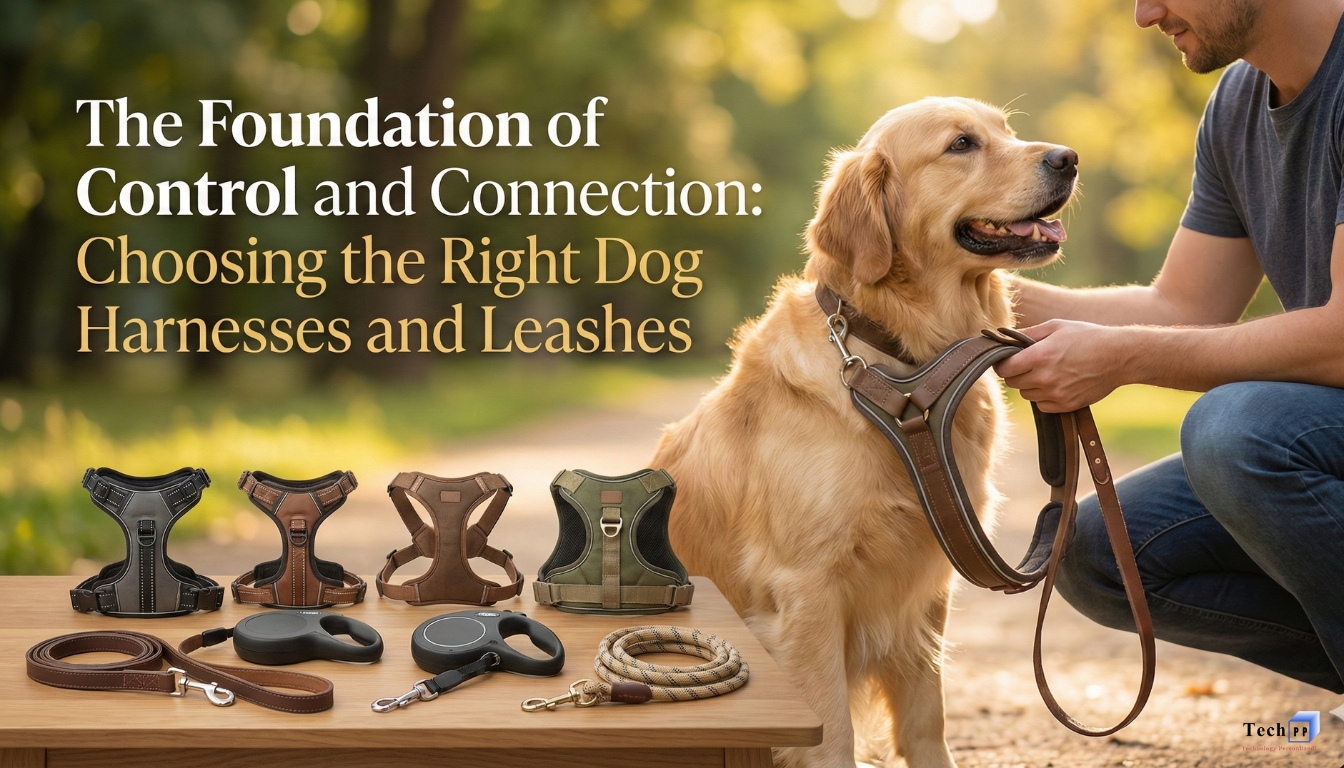
Dog Harnesses and Leashes! The simple act of attaching a leash is a profound gesture—a promise of safety, a tether of trust, and the beginning of a shared journey. Yet, this daily ritual is underpinned by a critical choice: the combination of dog harnesses and leashes you select. This gear is far more than nylon and plastic; it is your primary interface for communication, control, and comfort with your canine companion.
A poorly chosen setup can lead to frustration, injury, and a breakdown in the walking partnership. This guide delves into the functional symphony of harnesses and leashes, empowering you to choose equipment that fosters confidence, ensures safety, and transforms your walks from a tug-of-war into a harmonious stroll.
Decoding Dog Harnesses: Beyond the Basic Vest
The era of the collar-only walk is fading, and for good reason. Harnesses distribute pressure across a dog’s sturdy chest and shoulders, protecting the delicate trachea, neck, and spine. But not all harnesses are created equal, and the clip placement is the key differentiator.
- Back-Clip Harnesses:The attachment ring is on the dog’s back. These are excellent for casual walking with dogs who don’t pull, for car travel when paired with a seatbelt tether, and for providing a secure handle for assistance. However, they offer little control for pullers, as they can facilitate a oppositional reflex (like a sled dog), making pulling easier.
- Front-Clip Harnesses: The attachment ring is on the dog’s chest/sternum. This is the gold standard for loose-leash walking training. When the dog pulls, the front clip gently guides the dog’s chest to the side, redirecting their momentum and turning them back towards you. It discourages pulling through biomechanics, not force.
- Dual-Clip Harnesses: Offering the best of both worlds, these have clips on the back and the chest. You can use the back clip for relaxed walking or the front clip for training moments. Some models allow you to attach a leash to both clips simultaneously for maximum control over powerful breeds.
The Leash Lowdown: Material, Length, and Purpose
The leash is your direct line of communication. Its characteristics dictate the quality of your connection.
- Standard Fixed-Length Leashes (4-6 feet): The versatile workhorse. Made from nylon, leather, or biothane, they provide consistent control and are ideal for neighborhood walks, training, and maintaining proximity. Leather is durable and soft on the hands but requires maintenance; biothane is waterproof, easy-clean, and non-absorbent.
- Retractable Leashes: These offer variable length (often up to 26 feet) on a spring-loaded mechanism. They can be useful for allowing sniffing exploration in safe, open areas but come with significant risks. They teach dogs to pull against tension (the exact opposite of loose-leash walking), can cause severe rope burns, and make it impossible to quickly reel in your dog in an emergency. They are not recommended for training or busy areas.
- Long Lines (10-50+ feet):These are essential training tools, not for casual walks. Made of lightweight cotton or biothane, they give a dog freedom to practice recalls and explore at a distance in a controlled setting, acting as a safety net before full off-leash reliability.
Perfect Pairings for Specific Goals
Matching the right harness with the right leash creates a system tailored to your objectives.
- For the Dedicated Puller/Loose-Leash Training: Front-clip harness + 6-foot fixed leash. This combo provides gentle, effective steering and clear communication. Clip the leash to the front ring to guide, and have treats ready to reward when the leash is slack.
- For the Reliable, Casual Walker: Back-clip or dual-clip harness + a comfortable 6-foot fixed leash. This offers security and comfort without the need for constant redirection.
- For Hiking or Safe-Zone Exploration: A secure back-clip harness (with a handle for assistance) + a long line. The harness provides safety on tricky terrain, and the long line allows for environmental enrichment while you maintain control.
- For Small or Delicate Breeds: A well-fitted, padded harness is almost always preferable to a collar to avoid tracheal damage. Pair with a lightweight, thin fixed leash.
The Non-Negotiables: Fit and Safety
The most expensive gear is useless—or dangerous—if it doesn’t fit.
Harness Fit: You should be able to snugly fit two fingers between any strap and your dog’s body. The chest strap should sit high on the sternum, not low on the boney part of the ribs. The harness should not chafe the armpits or restrict shoulder movement. A proper fit prevents escapes (especially the tricky “backout”) and ensures comfort.
Leash Safety: Check hardware (clips, bolts) regularly for stress or corrosion. Ensure the handle is secure and comfortable for your grip. Never wrap a leash around your hand or wrist; a sudden lunge could cause serious injury.
Conclusion: Building a Dialogue, Not Applying a Brake
Choosing the right dog harnesses and leashes is the first step in rewriting the narrative of your walks. It shifts the dynamic from one of restraint to one of cooperative exploration. By understanding the mechanics of front-clip guidance, the communicative clarity of a fixed leash, and the paramount importance of comfort, you equip yourself not just with gear, but with the means to build a stronger, safer, and more joyful partnership with your dog. The walk becomes a conversation, and with the right tools, it’s one you’ll both look forward to having.