

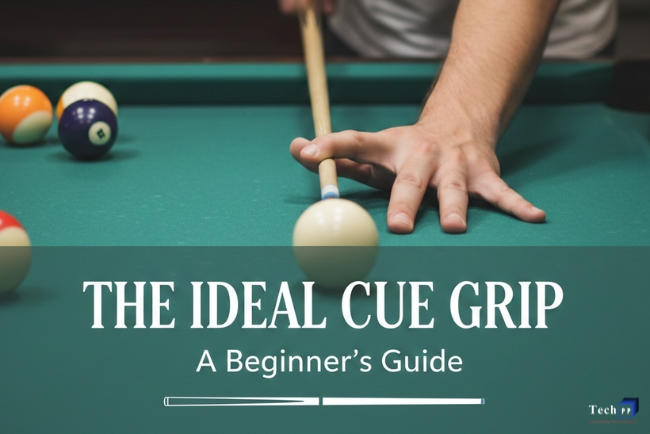
Cue Grip! If you’ve ever stood at the pool table, cue in hand, desperately trying to look like a pro, you’re not alone. Every beginner goes through this slightly awkward moment: Should my grip be tighter? Looser? Straight? Bent? It feels a bit like relearning how to shake hands—except someone’s watching, and you have to hit the ball decently.
But the good news is: the ideal grip isn’t about creating a textbook perfect form. It’s about finding a natural, controlled, and gentle balance—because in billiards, power rarely comes from brute force. It comes from calm hands, a smooth rhythm, and a deep understanding of the connection between your body and the cue stick.
Today, we’ll explain the ideal grip in a relaxed, reliable, and immediately effective way.
Why Your Grip is More Important Than You Think
Many beginners believe the most important thing is the shot itself—the power, the straightness of the cue ball’s trajectory, and the amount of spin. But these can only be achieved with a solid foundation. And the grip is that foundation.
A good grip feels like holding a small bird: firm enough to prevent it from flying away, yet gentle enough not to crush it. Too tight, and the billiard cue becomes stiff and unresponsive; too loose, and it wobbles like the wheels of a shopping cart.
Relaxed Hand — Not a Clenched Fist
One of the most common mistakes beginners make is gripping the cue like grabbing a rope in a storm. Professionals do the opposite. Their hands look relaxed – even lazy – as if the cue is doing all the work for them.
Here’s the trick:
Let the cue rest naturally on your fingers, not your palm. This encourages a natural swing and helps maintain accuracy, especially when using a high-precision snooker cue with a 9.5mm tip. A relaxed grip leads to a smoother stroke. In billiards, fluidity always trumps brute force.
Keep Your Wrist Straight, Not Stiff
Imagine your wrist as a hinge. It shouldn’t be stuck – but it also shouldn’t wobble.
Straightening your wrist allows you to:
- A cleaner delivery
- A natural cue path
- Better follow-through
This is crucial if you want to make exquisite shots. It’s also helpful when switching between different billiards sports, whether you’re holding a snooker cue or trying out English pool.
Let the Cue Swing naturally, Don’t Force It
A good shot is like a pendulum—calm, rhythmic, and stable. If your shot feels stiff, rigid, or rushed, your grip is likely the culprit.
Try this exercise:
- Hold the cue gently.
- Let it swing back and forth without hitting a ball.
- Focus on how the cue moves when your grip softens.
You’ll feel when it’s right. The cue almost “breathes” with your movements.
Adjust Your Grip Position — Don’t Copy Others Blindly
Your ideal grip position may not be the same as your friend’s, your coach’s, or the pro professional player you admire. We all have different arm lengths, shoulder mobility, and natural postures.
Generally:
- Your grip hand should sit somewhere near the balance point of the cue.
- But adjust until the cue swings comfortably without hitting your hip or drifting sideways.
Keep Your Forearm Vertical at Impact
This is one of the most reliable fundamentals in billiards. When the cue strikes the ball, your forearm should be straight down, forming a clear L-shape with the cue stick.
The reasons are:
- Stable impact
- Improved power transfer
- Straight delivery
Try preparing slowly for the shot, constantly checking your arm position until it becomes muscle memory.
Don’t Be Afraid to Experiment a Little
Even pros adjust their grip over time. The grip that feels natural today may change as your confidence grows, your cue equipment upgrades, or you explore different variations of billiards.
For example:
- Trying a new pool cue (click to learn more)
- Changing to a cue with a different cue shaft diameter
- Moving from casual room play to club-level tables
Your grip will adapt — and that’s a good thing. Billiards, like handwriting, is personal.
Learn to Feel the Shot — Not Force It
The most beautiful shots in the world share a common quality: touch. Touch isn’t taught; it’s something you discover gradually. When you grip the cue correctly, you’ll feel the touch, timing, spin, and the soft touch of the cue ball. Then, your game will change.
You’ll find:
- More consistent shots
- Better cue ball positioning
- Less frustration
- More confidence
- More joy
Your Grip Is Your Beginning
A good grip is the first step from being a casual beginner to becoming someone who feels genuinely at home around the pool table. It’s where the nerves fade, and the fun begins.
Your cue grip won’t become perfect overnight — but it will improve quickly if you stay relaxed, stay curious, and trust the process.