

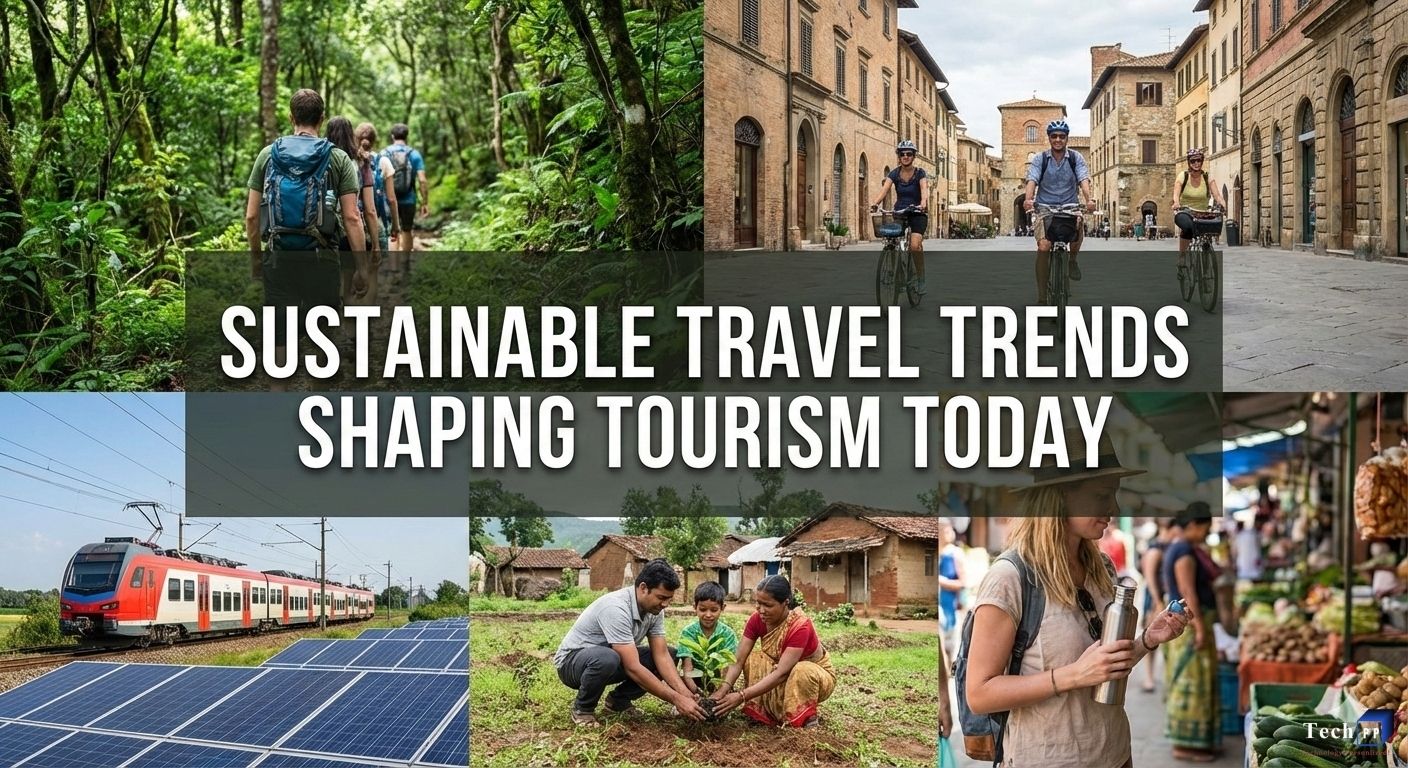
Sustainable travel is not just something for a select few environmentally-friendly tourists to be interested in. It has also been a transformative influence on how destinations are marketed, how tourism businesses develop and how consumers choose. Amid climate change, overtourism and environmental decline coming to the world’s attention, the industry is facing a call for change.
Today’s travellers are more educated and value-conscious than ever before. More and more are asking for their experiences to minimise environmental impact, benefit local communities, and protect culture. At the same time, governments and tourism operators are realising that future success has to be about preserving the very places that tourists come for.
This has, in turn, sped up the embrace of sustainable travel by all sectors. From green places to stay and low-carbon travel, right through to community-led tourism and carbon-conscious trip planning, sustainable trends are redefining travel at all levels of the industry.
What Is Sustainable Travel and Why It Matters Today
Sustainable travel we mean the kind of travelling that takes into account environmental, social and economic consequences. The target is to satisfy the needs of contemporary tourists without denying the same opportunities to future generations.
Sustainability of travel has an environmental factor– particularly: to limits carbon emissions, limit use of scarce natural resources and personal choices. Socially, it focuses on respecting local cultures, fair labor practices and community involvement. Economically, it makes local communities less dependent on E10 profits and instead leads tourism revenue to benefit the community.
Sustainable travel is gaining importance as the downsides of mass tourism have become more apparent. Overcrowded cities, damaged ecosystems, a lack of water and ballooning housing costs associated with short-term rentals have caused destinations to reconsider how tourism is is handled. Responsible tourism can be a way to reconcile the economic and environmental benefits, as well as social responsibility.
Travel trends that are changing the face of tourism industry forever
Eco-Friendly Accommodation and Green Certifications
Eco-friendly accommodation is one of the most prominent sustainable travel trends. Energy-efficient systems, reduced water usage and prohibitions on single-use plastics have been incorporated as standard at hotels, resorts and lodges.
Green certifications enable travellers to easily identify responsible operators. These are typically supported by programmes run by organisations, such as the initiatives under UN Tourism’s sustainability initiatives to tourism businesses to engage in best practices and adhere to quality standards.
Slow Travel and Fewer, Longer Journeys
Slow travel is the opposite deliberate practice of spending longer time in one place as opposed to moving through many places. This modality has the potential to decrease transport emissions, and also makes cultural immersion deeper in addition to providing better economic benefit for host communities.
The longer people stay, the more they tend to utilise local services like markets, guides and independent accommodation providers. This trend falls in line with the objectives of sustainable tourism and is becoming increasingly popular among adventurers who are looking for meaningful experiences rather than ticking off a checklist on a volume based itinerary.
Sustainable Transport Choices
Transport also continues to be one of the area of greatest emissions in relation to tourism. This trend has made lower-impact means of transport more important to both holiday-makers and the tourism industry.
Rail journeys, electric car hires and public transport connections are already picking up in some areas with good infrastructure. Aviation is also stepping up, with airlines buying new aircraft that consume less fuel and looking at sustainable aviation fuels as part of wider decarbonisation efforts.
Community-Based and Regenerative Tourism
CBT puts local people at the heart of the travel experience. But instead of being operators seeking to extract value from destinations, that model returns ownership and control — and the economic benefit derived directly off of them —to communities.
Regenerative tourism takes this a step further, aiming to leave destinations better than they were found. This may have configurations to restore habitat, preserve culture or provide interpretive services for visitors. These techniques have been increasingly discussed around responsible travel, from TechPP’s travel coverage (How Technology is Changing the Way We ‘Travel’ and “Responsible Travel” Too) to how tourism models have changed depending on traveller expectations.
Conscious Consumerism and Ethical Experiences
Travellers are also becoming pickier about where their money ends up. Ethical wildlife encounters, fair-trade souvenirs and locally owned tour operators are the preference rather than exploitative or mass-produced versions.
This move towards more thought-conscious consumerism demands greater transparency and accountability from the travel sector. The companies who are transparent in their efforts are also the one’s more likely to win the trust and loyalty of today’s traveler.
Digital Tools Supporting Sustainable Choices
Technology is also a factor in helping to make sustainable travel more attainable. Carbon footprint calculators, sustainability ratings and digital travel planners enable intelligent decisions both before and during a trip.
There are many online resources covering such trends in sustainability, including TechPP’s sustainable travel insights behaviour, which offers interesting tips on how tech and innovation is shaping more environmentally sustainable travel practices?
Sustainable Travel Trends Shaping the Future of The Tourism Industry
Destination Management and Visitor Caps
Visitor management measures are being imposed on many sites to avoid congestion and environment impact. These involve timed entry programmes, visitor quotas for daily attendance and differential pricing to promote off-peak visits.
These measures both safeguard the natural and cultural values, and enhance the visitor experience. They also represent a move away from growth-at-all-cost tourism models to more balanced, sustainable approaches.
Policy Changes and Industry Standards
Many governments and international bodies are starting to incorporate sustainability into tourism policy. Environmental impact evaluations, emissions-reporting mandates, and incentives for sustainable practices are increasingly prevalent.
International frameworks supported by organisations such as the United Nations Environment Programme serve to harmonise how tourism development fits in with broader climate change and conservation objectives across destinations.
Marketing Shifts Towards Purpose-Driven Travel
Even tourism marketing is adapting to express sustainability! Destinations now emphasize conservation efforts, cultural authenticity and benefits to the community rather than just luxury or volume.
This transformation strikes a chord with travellers who are looking for their travels to reflect those personal values. The importance forward-thinking tourists place on purposeful travel is set to be a key point of difference for travellers in an increasingly competitive global tourism landscape.
Business Model Innovation and Novel Revenues
Hotels going greener Sustainable travel trends are influencing the industry by changing how accommodation, transportation and experience design happens. Travelling as a service, pricing that includes the cost of carbon and rewards schemes tied to sustainability are becoming new revenue streams.
When sustainability becomes woven into the very fabric of their operations, tourism companies can help to reduce risk and also open up new avenues for growth and differentiation.
Frequently Asked Questions
Q1. Why does the tourism industry need to care?
Responsible travel is not only better for the environment and local cultures, it is a better way to experience the world. Without long-term sustainable efforts, many places become a victim of pollution and civil backlash.
Q2. Sustainable travel trends of today, what’s hot?
Some of the latest trends are eco-friendly lodging, slow travel, ecotourism transportation options, community-based tourism companies in developing world countries and regenerative travel programs incorporating digital technology to make responsible choices.
Q3. What can travelers do to minimize their impact while traveling?
Travellers can also lower their impact by opting for low-emission transportation, staying at eco-certified accommodation, and supporting local businesses while minimizing waste and traveling less often but for longer periods of time.
Conclusion
Eco-friendly travel trends are completely revolutionizing the tourism sector. What was once a nice-to-have feature, is now integral to how destinations are run and businesses operate – as well as how holiday makers decide where to travel.
Through adopting sustainable principles, investing in local communities, embracing the power of technology and maintaining the focus on a long-term view to guide our activities, we believe that tourism can continue to thrive in an ever-changing world. Green travel is now more than minimizing harm. It’s making the world a better for host, guest and neighbourhood.