

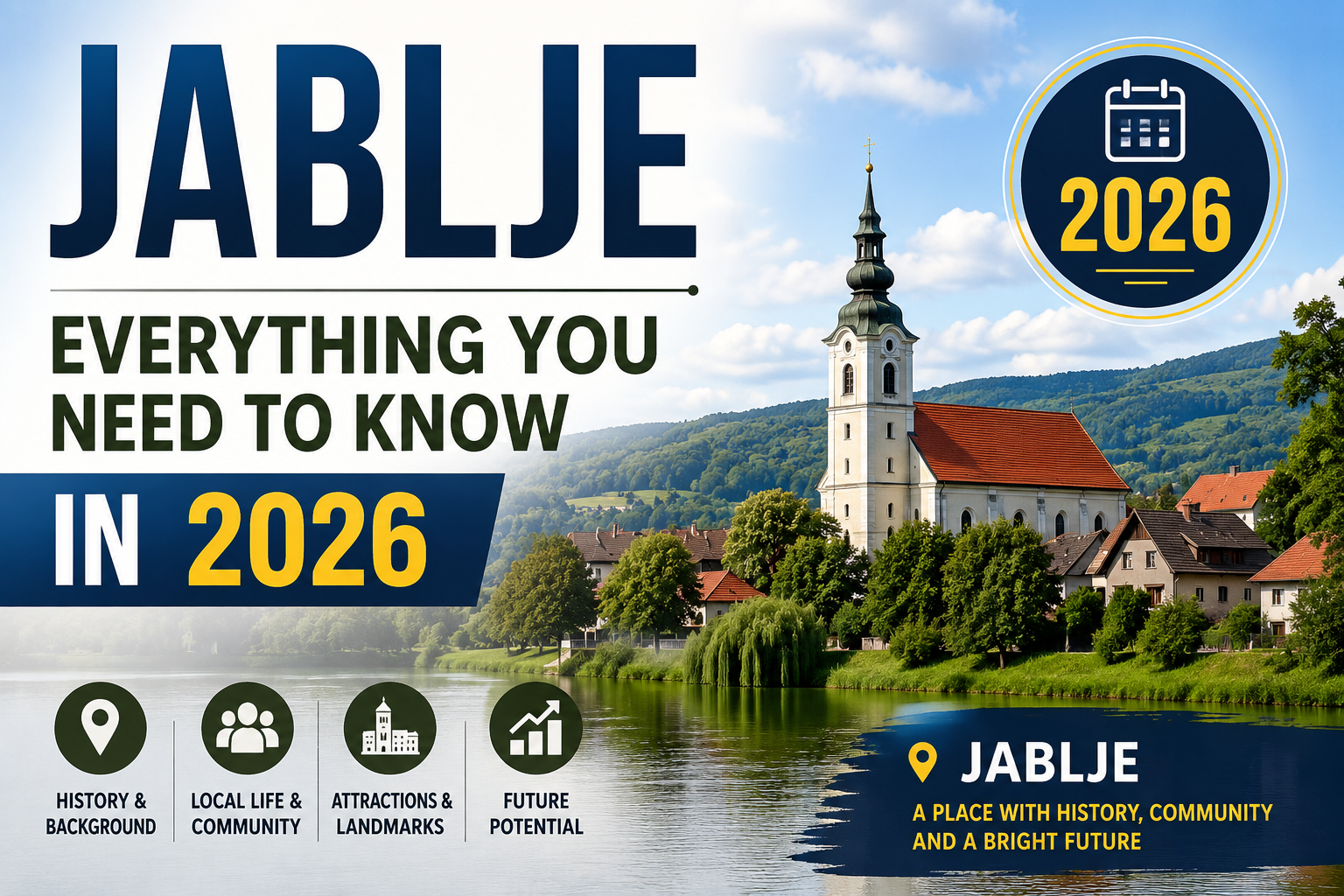
Jablje Castle is a Renaissance manor in Slovenia with later Baroque additions. Built around the 16th century, it features a rectangular layout, an inner courtyard, and four corner towers. In 2026, it remains one of Central Europe’s most underrated historic landmarks — and a growing destination for heritage travelers.
Few castles in Central Europe manage to stay hidden for as long as Jablje has. Tucked away in Slovenia, this Renaissance manor has quietly stood for centuries while more famous landmarks grabbed the spotlight. That is starting to change.
Interest in Jablje has grown steadily among history enthusiasts, architectural researchers, and travelers seeking something off the usual tourist circuit. The castle’s blend of Renaissance structure and Baroque detail makes it architecturally significant — not just locally, but in the broader context of European heritage.
This guide covers everything you need to know about Jablje Castle in 2026. You will learn about its origins, its architectural features, its current condition, and how to plan a visit. Whether you are a first-time visitor or a researcher looking for reliable background, this is your starting point.
Historical Background of Jablje Castle
When and how was Jablje Castle originally built?
Jablje Castle’s origins trace back to the Renaissance period, when manor-style fortifications were spreading across Central Europe. The structure was built as a residential and defensive compound — practical in its purpose, but thoughtful in its design.
Like many European castles of its era, Jablje did not emerge from a single construction effort. It developed over time. The core Renaissance structure came first, establishing the basic layout that still defines the castle today. Later additions, particularly during the Baroque period, changed the appearance and character of the building without erasing its original foundation.
How did Jablje develop from the Renaissance to the Baroque period?
The transition from Renaissance to Baroque was not a renovation in the modern sense — it was a gradual layering. As new owners came to the estate and tastes in architecture evolved across Europe, Jablje absorbed those changes.
Baroque architecture emphasized ornamentation, grandeur, and dramatic effect. Applied to an existing Renaissance structure, these principles produced a distinctive visual tension — clean, rational lines from one era meeting the decorative energy of another. That tension is part of what makes Jablje architecturally interesting today.
Who were the key historical figures associated with Jablje?
Note: Verified historical records naming specific owners or key figures associated with Jablje Castle are not widely documented in publicly available English-language sources. If you are researching specific individuals connected to the estate, consulting Slovenian national archives or local historical societies will give you the most accurate information.
What is clear from architectural and regional records is that Jablje passed through the hands of noble families over the centuries — a pattern common to manor estates across Slovenia and the broader Habsburg-influenced region.
What role did Jablje play in regional history?
Jablje sits within the historical and cultural landscape of the Slovenian region, an area that was long part of the Habsburg Empire and later experienced significant change across the 20th century. Estates like Jablje served as centers of local governance, agriculture, and social life for surrounding communities.
Its survival through multiple political transitions — including the upheavals of the 20th century — is itself a testament to its structural resilience and the persistence of local preservation efforts.
Architectural Features and Design
What makes Jablje Castle architecturally significant?
Start with the layout. Jablje Castle follows a rectangular plan centered on an inner courtyard — a design approach rooted in Renaissance principles of symmetry and proportion. This layout was practical as well as aesthetic, providing a secure perimeter while organizing interior spaces around a central open area.
Four corner towers anchor the structure at each end of the rectangle. Corner towers served a dual purpose in Renaissance and early Baroque manor design: they reinforced the building structurally and provided elevated vantage points. At Jablje, the towers also contribute significantly to the castle’s visual silhouette.
How did Baroque additions change the original Renaissance structure?
Baroque architects and craftsmen did not demolish what came before — they built on top of it, sometimes literally. At Jablje, the Baroque layer introduced decorative elements that softened the austerity of the Renaissance base. Ornamentation became more expressive. Surfaces that might have been plain received more elaborate treatment.
The result is a structure that reads differently depending on which part you focus on. The overall massing and geometry remain Renaissance in character. The detailing, in places, reflects a later sensibility. For students of architectural history, this layering offers a clear illustration of how building traditions evolved across the 16th and 17th centuries.
How does Jablje compare to other European castles from the same era?
Jablje fits into a broader tradition of Renaissance manor construction that spread across Central Europe — particularly through what is now Austria, Slovenia, Croatia, and the Czech Republic — during the 16th century. These manors shared common design principles: rectangular or quadrilateral layouts, inner courtyards, and corner towers.
What distinguishes Jablje is not dramatic uniqueness but solid typological integrity. It is a well-preserved example of a building type that shaped how noble estates functioned and looked across the region. Compared to more heavily modified or partially ruined examples elsewhere, Jablje retains enough of its original character to be genuinely instructive.
Current State and Preservation Efforts
What is the current condition of Jablje Castle?
Jablje Castle stands today as a historically significant structure that has experienced the challenges common to heritage buildings across post-communist Central Europe. Maintenance of large stone structures requires sustained funding and specialist expertise — both of which have historically been difficult to secure consistently.
Note: For the most current and detailed information on the physical condition of Jablje Castle, contacting the Slovenian Institute for the Protection of Cultural Heritage (ZVKDS) is recommended. They maintain up-to-date records on designated heritage sites.
What preservation and restoration work has been done at Jablje?
Slovenia’s framework for cultural heritage protection falls under the authority of the ZVKDS, which oversees conservation efforts across the country’s designated historic monuments. Jablje Castle is recognized within this system, which provides a legal and institutional basis for preservation activity.
Restoration of Renaissance and Baroque structures involves balancing two goals that sometimes conflict: stabilizing the physical structure against further deterioration and maintaining the authenticity of original materials and design. Where replacement materials must be used, conservation standards require matching original techniques and compositions as closely as possible.
What challenges does Jablje Castle face in terms of preservation?
Stone deterioration, moisture ingress, and roof integrity are the most common structural challenges facing castles of Jablje’s age across the region. Beyond physical maintenance, there are financial realities. Heritage restoration is expensive, and without consistent visitor revenue or dedicated public funding, conservation projects can stall.
Growing tourism interest in Jablje could shift this equation positively. Sites that attract regular visitors generate the economic case for sustained investment — both public and private.
Visiting Jablje Castle in 2026
Where is Jablje Castle located and how do you get there?
Jablje is located in Slovenia, in the central European region known for its layered history and well-connected road networks. Slovenia is a compact country, which works to the visitor’s advantage — most major sites are within a few hours of Ljubljana, the capital.
Note: Specific current travel routes, bus schedules, and parking details should be confirmed through Visit Slovenia (www.slovenia.info) or local tourism boards before your trip, as these can change seasonally.
What are the operating hours and admission details for Jablje Castle?
Operating hours and admission fees for heritage sites in Slovenia vary by season and are subject to change. Before visiting, check the official Slovenian tourism portal or contact the local municipality responsible for the site. Visiting without confirming access details first can result in a wasted trip — particularly for sites that are not staffed year-round.
What should you expect from a guided tour of Jablje?
If guided tours are available during your visit, they typically cover the castle’s architectural history, the transition from Renaissance to Baroque design, and the significance of the structure within regional heritage. A guided tour is worth taking if you want context beyond what you can observe visually.
Independent visitors who prefer to explore at their own pace can usually gather significant information from on-site information panels, though the depth of interpretation varies by site.
When is the best time to visit Jablje Castle?
Late spring and early autumn tend to offer the best balance of conditions for visiting heritage sites in Slovenia. The weather is mild, crowds are lighter than peak summer, and natural light — important for architectural photography — is often better than during the hotter midday hours of July and August.
Winter visits are possible but require more preparation. Check access conditions in advance if visiting between November and March.
What else is worth visiting near Jablje Castle?
Slovenia’s density of heritage sites means that most visits to Jablje can be combined with other destinations. The region surrounding Ljubljana is rich in castles, churches, and historic town centers. Škofja Loka, Kamnik, and the Ljubljana Castle complex are all within reasonable driving distance and offer complementary historical context.
Cultural Impact and Tourism
What role does Jablje Castle play in local tourism?
Heritage tourism in Slovenia has grown steadily over the past decade. Travelers increasingly seek destinations that offer historical depth alongside natural beauty — and Slovenia delivers both. Jablje sits at an intersection of those interests, appealing to visitors who want to move beyond the country’s most-marketed sites.
For the local community, a functioning heritage site creates employment, supports local businesses, and builds civic identity. The economic argument for investing in Jablje’s preservation is partly financial — it matters to the people who live nearby.
Has Jablje Castle appeared in media or popular culture?
Slovenia’s historic sites have attracted growing attention from European media, travel publications, and documentary projects focused on underrepresented heritage. Jablje, as an architecturally distinctive and relatively undiscovered site, fits a profile that documentary filmmakers and travel journalists increasingly seek out.
Note: If you are researching specific media appearances or cultural references, local Slovenian archives and tourism bodies will have the most complete records.
What events and cultural programs take place at Jablje?
Heritage sites across Slovenia host seasonal events including open days, guided walks, educational programs for schools, and occasionally cultural performances. Whether Jablje participates in regional heritage days or similar initiatives is worth confirming with local tourism offices, as programming changes from year to year.
Community involvement in a castle’s life — through volunteering, educational partnerships, or local events — tends to correlate with better long-term preservation outcomes. Sites that remain connected to their communities attract ongoing attention and support.
Why Jablje Castle Still Deserves Your Attention
Jablje Castle has survived centuries of political change, shifting ownership, and the quiet erosion that time brings to stone and mortar. That survival is not accidental. It reflects both the strength of the original construction and the sustained efforts of those who recognized its value.
In 2026, Jablje sits at an interesting moment. Visitor interest is growing. Awareness of Slovenian heritage is rising among international travelers. And the architectural story Jablje tells — of Renaissance design meeting Baroque ambition, of four corner towers framing an inner courtyard that has watched centuries pass — is one that rewards attention.
If you are planning a visit, start by confirming access details through official Slovenian tourism channels. If you are researching Jablje for academic or professional purposes, the ZVKDS is your most reliable institutional contact.
The castle is there. It has been there for a long time. It will reward the effort you put into reaching it.
Also Read this: Maasgracve Guide: Latest in Tech, Travel & Business
Frequently Asked Questions About Jablje Castle
Q1: What architectural style is Jablje Castle?
A1: Jablje Castle is a Renaissance manor with later Baroque additions. The core structure follows Renaissance design principles — a rectangular layout with an inner courtyard and four corner towers. Baroque modifications added decorative elements that changed the visual character without altering the fundamental plan.
Q2: Where exactly is Jablje Castle located?
A2: Jablje Castle is located in Slovenia, Central Europe. For precise directions and current access information, Visit Slovenia (www.slovenia.info) is the recommended starting point.
Q3: Is Jablje Castle open to the public in 2026?
A3:Access to Jablje may vary by season. Confirm current opening hours and admission details through local Slovenian tourism offices or the ZVKDS before planning your visit.
Q4: What is the significance of Jablje’s four corner towers?
A5: The four corner towers are a defining feature of Jablje‘s Renaissance design. They provided structural reinforcement and elevated observation points, and they remain visually distinctive elements of the castle’s exterior today.
Q6: Who is responsible for preserving Jablje Castle?
A6: The Slovenian Institute for the Protection of Cultural Heritage (ZVKDS) is the primary authority overseeing conservation of designated historic sites in Slovenia, including Jablje Castle.
Q7: How does Jablje Castle compare to other Slovenian castles?
A7: Jablje is one of several Renaissance and Baroque manor-style castles in Slovenia. Its rectangular layout and four-tower configuration are characteristic of the regional building tradition. Compared to heavily modified or ruined examples elsewhere, Jablje retains significant architectural integrity.
Q8: What is the best way to learn more about Jablje Castle before visiting?
A8: Contact the Slovenian tourism board, consult resources from the ZVKDS, or reach out to local history and heritage organizations in the municipality where Jablje is located. For academic research, Slovenian national archives hold records that are not always available in English-language publications.