

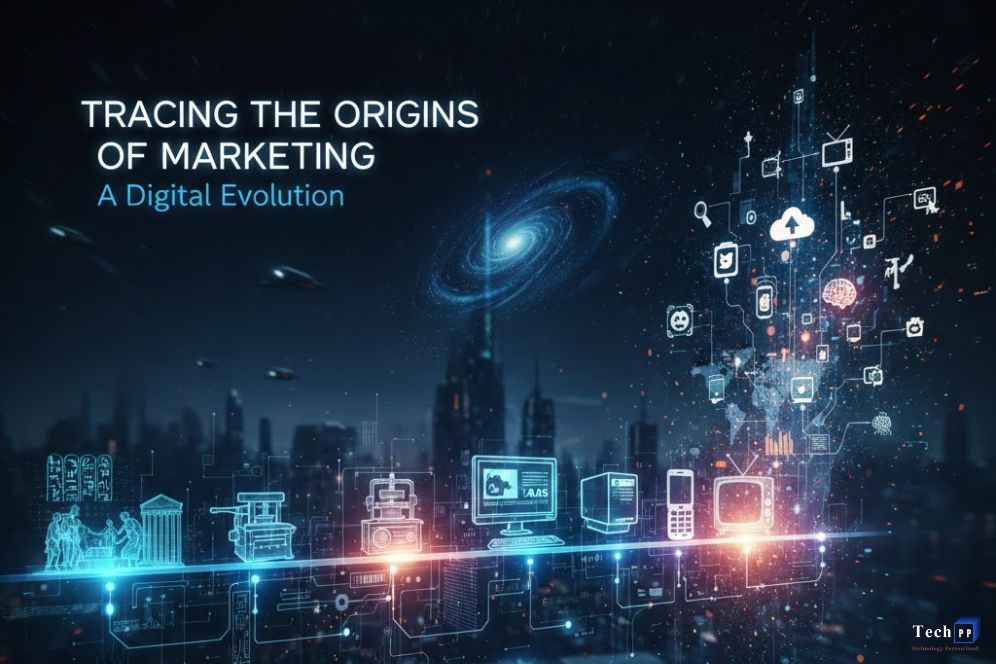
Marketing can seem a relatively new creation, particularly in a world that has become overwhelmed with digital marketing, social media and targeted marketing efforts, but the roots of marketing can be traced back to the very dawn of mankind. Long before businesses existed in their current form, humans engaged in trade, and with trade came the need to communicate value. Early merchants in ancient Mesopotamia, Egypt, and Greece carved symbols into clay tablets or painted signs outside markets to show what they offered. These were some of the first marketing examples: the simple and straight forward attempts to gain attention and influence buyers.
With growth in civilizations, there were increased chances to trade. In ancient Rome, merchants used to have messages painted on the walls, or announce products with the help of town criers. Markets were noisy, lively places, and sellers quickly learned that presentation mattered. Whether through packaging, verbal persuasion, or visual symbols, the act of differentiating one product from another took form. This was the foundation of what would later on be known as organized marketing which made the buyers know why one decision could be more preferable than another.
The Arrival of Print and the Birth of Modern Marketing
Another major change in marketing was the discovery of the printing press in the 15th century. Information could now be copied on a large scale. Towns saw the appearance of printed leaflets, pamphlets, and early forms of advertisements. Businesses used print to reach audiences far beyond the boundaries of a crowded marketplace. This was one of the first times marketing moved from direct, face-to-face persuasion into mass communication.
The Industrial Revolution was transforming society by the 18th and 19th centuries. The mass production produced more than ever and business enterprises had to be distinguished. Newspapers became a central tool for reaching large audiences. Early branding took shape when companies realized that logos, packaging, and messaging could create loyalty. With more competition came the need for clearer positioning. Marketing started to change the course of a mere announcement of items to strategic communication.
Simultaneously, transportation advances increased markets. Products had access to new areas, and this required marketing to suit other audiences who were not familiar with a certain brand. Being more conscious of customer preferences, businesses started to study them, sowing the seeds of market research.
The 20th Century and the Rise of Marketing Strategy
The 20th century marked the turning point when marketing evolved into a formal discipline. Radio advertising in the 1920s and television advertising in the 1950s transformed the way companies communicated. These mediums allowed businesses to tell stories, build emotional connections, and reach millions at once. Advertising agencies grew in influence, shaping public perception through jingles, slogans, and iconic commercials.
During this period, consumer psychology became central to marketing. Businesses started posing some more profound questions: Why do consumers like this or that product? The role of emotions in decision making? Which persuasive skills are the most effective? It was these investigations that led to the creation of organized marketing departments and scholarly research.
By the end of the 20th century, marketing strategy was an ordinary part of business planning. Organizations followed the customer trails, brand name and invested hugely on the TV, radio, print and outdoor adverts. Products were no longer competing based on functionality but on identity, emotion and experience.
A Short Section on Digital Marketing Agencies
As the internet took shape in the 1990s and early 2000s, businesses quickly realized they needed experts who understood online search, website visibility, and emerging platforms. A digital marketing agency stepped into that space, helping brands transition from traditional tactics to internet-based strategies. This is a major concept, but not the only one, as the long history of development of marketing during the centuries is full of numerous chapters.
The Internet Revolution and the Transformation of Marketing
The rise of the internet fundamentally reshaped the marketing world. Suddenly, communication became interactive. Consumers had stopped being passive receivers of information that could be searched, compared, remarked and shared. This change led to the entire reconsideration of the ways in which companies targeted their audiences.
The search engines transformed how people learnt information. Companies started to optimize sites in order to be ranked in the search results and this led to the establishment of a new field, search engine optimization. Social media amplified voices, turning consumers into both critics and promoters. Email marketing, online reviews, display ads, and e-commerce all emerged around the same time, overwhelming companies with opportunities and challenges.
It is the period when marketing turned into a data-driven one. Marketers could also count clicks, conversions, engagement, and patterns of behavior, instead of guessing the number of people who saw a billboard. Campaigns became adjustable in real time. Creativity remained important, but strategy now relied heavily on analytics. Companies could personalize communication, tailor experiences, and respond quickly to customer needs.
Marketing’s Expansion Into a Global Force
Nowadays in marketing there are borders that are crossed faster than ever before. It can pass on a message around the globe in a few seconds. Brands connect with viewers in an uncountable number of ways, starting with streaming services, to mobile applications. Marketing teams use artificial intelligence to predict trends, automate tasks, and understand customer behavior more deeply than ever before.
Yet, despite the complexity of modern marketing, its core purpose remains unchanged: to help people understand the value of something and decide whether it meets their needs. The instruments are different, the media are numerous, and the tactics have become more advanced yet the principles behind the connection, clarity and persuasion are historical.
ALSO READ: Shahbaz Ansari: Journey to Success
The Lasting Influence of Marketing’s Long Journey
Going back, it would be evident that marketing did not emerge out of thin air. It was slowly developing along with societies evolving, technologies developing, and business expanding. Each era added a new layer of understanding, from ancient marketplace cries to the precision of digital targeting.
Marketing is constantly advancing, which is being motivated by innovation and human behavior. Its history reveals that the tools and technologies might change; nevertheless, communication is in the center of things. Companies that recognize this long curve of evolution are more likely to maneuver in the future, integrating the best principles of the past and the future.